
Quick answer: Kashmir doesn’t work like most tourist destinations where one cab takes you everywhere. Srinagar based cabs handle airport transfers, city sightseeing and drop-offs to places like Gulmarg or Pahalgam but once you arrive, local taxi unions control sightseeing inside those zones and you will usually need to switch to a union taxi. Expect ₹2,500–3,300/day for a sedan or SUV on standard routes more for winter travel or remote valleys. The most common tourist complaint isn’t the union system itself it’s inflated “all-inclusive” quotes from unregistered agents and the classic “your hotel is closed” redirect scam. Book through a registered J&K Tourism operator, confirm the fare and vehicle before you get in and you will avoid nearly all of it.
Book Kashmir cab service online here
Kashmir’s tourist transport isn’t run by one open market it’s divided into zones, each controlled by a local driver association (a “union”). Major destinations like Gulmarg, Pahalgam and Sonmarg each have their own union that manages taxis operating within that specific area.
This means your Srinagar-hired cab can legally drop you off at these places, but it typically cannot pick up local sightseeing routes inside the zone for example driving you up to Gulmarg’s Gondola station or around Pahalgam’s Betab and Aru valleys. At the zone boundary, your Srinagar driver usually hands you off to the local union taxi stand where you book a separate vehicle for local sightseeing.
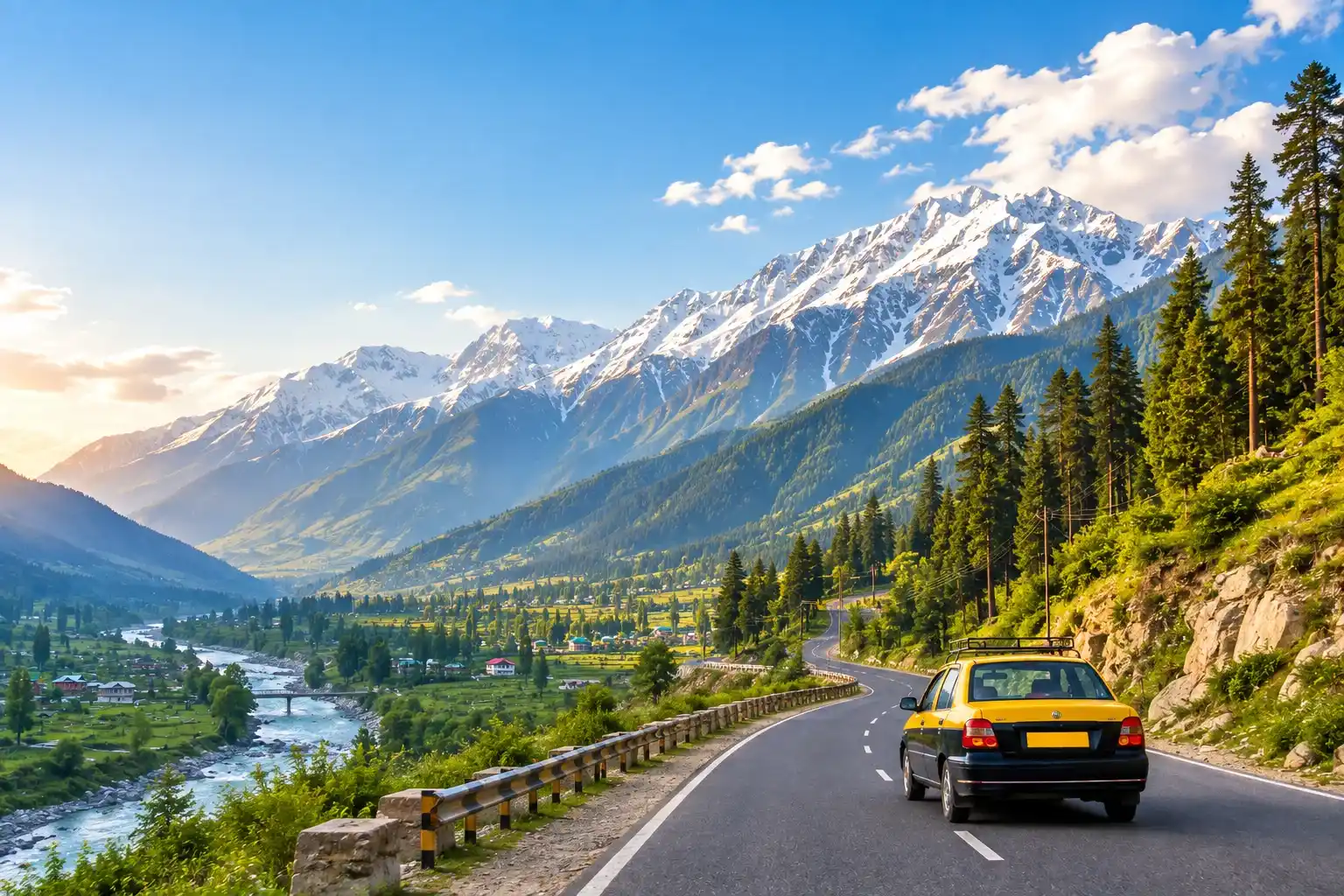
This catches a lot of first-time visitors off guard and gets misread as a scam. It isn’t one but it’s a longstanding local system meant to protect the livelihoods of drivers based in these tourist towns. The frustration is real, but the system itself is legitimate.
What to expect at the handoff:
Taxi fares in Kashmir vary depending on the vehicle, route, travel dates and season. For a Srinagar-based taxi, a sedan such as an Etios, Dzire or Amaze generally costs around ₹2,500–₹3,000 per day. An SUV such as a Scorpio, Xylo or Tavera usually costs about ₹3,000–₹3,500, while an Innova or Innova Crysta can range from ₹3,300–₹4,500 per day. For larger groups, a 12–17 seater Tempo Traveller generally costs around ₹5,000–₹7,500 per day.
For common tourist routes from Srinagar, a sedan round trip to Gulmarg generally costs around ₹2,500–₹3,300, while Srinagar to Pahalgam and Srinagar to Sonmarg are typically around ₹2,800–₹3,500. A full day of local Srinagar sightseeing usually falls around ₹2,500–₹3,300, depending on the vehicle and itinerary.
These are indicative 2026 prices, not fixed fares. Rates can increase during peak travel periods and for longer or more demanding routes such as Gurez Valley and Kargil. Before booking, confirm what is included in the quotation. Fuel, tolls, parking, driver charges and other expenses can vary depending on the route and taxi operator, while entry tickets, guide fees and adventure activities are generally paid separately.
No, not directly. Union taxis are booked in person at the local taxi stand once you arrive at that destination so there’s no centralized online booking system for them. If you want this handled in advance, a registered travel agent can sometimes arrange it through their local contacts, but you can’t do it yourself the way you’d book a hotel or an outstation cab.
What you can pre-book online or by phone is your Srinagar-based cab for airport transfers, city sightseeing and outstation drop-offs.
The vast majority of Kashmir cab operators are honest, but a few recurring patterns account for most of the bad experiences travelers report:
The “hotel is closed/full” redirect. A driver claims your already booked hotel or houseboat has closed, changed names or is full, then steers you toward a different property that pays him commission. If you have a confirmed booking, insist on being taken there call the hotel directly if you are unsure.
Inflated “all-inclusive” tout quotes. Unregistered drivers or middlemen near tourist hubs sometimes quote a flat price well above the official union rate, banking on tourists not knowing what a fair rate looks like. Checking the point-to-point rate ranges above before you negotiate removes most of this risk.
Fake “meter is broken” or “no rate card” claims. Since most tourist taxis in Kashmir run on fixed, not metered, rates, this specific line is less common here than in other Indian cities but vague “market rate” pricing without a clear number is a similar red flag.
What actually protects you:
Book through a J&K Tourism-registered operator or a driver with a visible tourism permit
Get the fare confirmed in writing (SMS/WhatsApp) before the trip starts
If overcharged at a union stand, you can report it to the union office on site
Carry some cash as backup — card readers work in most places but can have network gaps in remote areas
Safety conditions in Kashmir can shift with weather and security developments, so it’s worth checking current advisories close to your travel dates rather than relying on older information. A few consistent, practical notes:
Mountain passes (Zojila, Razdan) are seasonal and weather-dependent — they can close on short notice due to snow or landslides. Build buffer days into itineraries that depend on them.
Road accidents on hill routes are the more statistically common risk than security incidents — drive during daylight where possible and choose operators whose drivers are specifically experienced on mountain roads.
Security-related disruptions, when they happen, tend to affect the Srinagar–Jammu highway and air travel out of the valley more than local sightseeing routes. Registered operators generally stay in close contact with tourists during any disruption.
Solo women travelers commonly ask about safety specifically — verified operators offering GPS tracking, driver background checks and 24/7 check-ins address most of this concern.
Confirm the operator is J&K Tourism registered, not just a listing on a booking aggregator
Get the driver’s name, phone number, and vehicle registration before pickup, not on arrival
Clarify upfront whether union taxi legs (Gulmarg, Pahalgam, Sonmarg sightseeing) are included in your package or a separate cost you’ll pay locally
For winter travel to Gulmarg or high-altitude routes, confirm you’re getting a 4×4/SUV, not a sedan
Keep some cash on hand even if you plan to pay digitally
Across independent reviews and trip reports, a consistent pattern shows up: the transport company matters less to travelers than the individual driver assigned to them. The most repeated praise is for drivers who double as informal guides sharing local knowledge, adjusting the pace for families or older travelers, and being reachable and punctual before pickup. The most repeated complaints are about mismatched expectations at union boundaries and vague pricing agreed verbally rather than in writing. Travelers who negotiated and confirmed the fare in advance report far fewer issues than those who agreed to a vague quote and settled up at the end.
Why can’t one cab take me everywhere in Kashmir?
Because tourist zones like Gulmarg, Pahalgam and Sonmarg are controlled by local taxi unions that manage sightseeing within their area. Your outstation cab can drop you off but usually can’t do local sightseeing inside these zones.
What’s a fair price for Srinagar to Gulmarg?
Roughly ₹2,500–3,300 round trip for a sedan, more for an SUV or during peak/winter season.
Do union taxis accept cards?
Most accept both cash and card, but carrying cash as backup is recommended since network coverage can be inconsistent in remote areas.
Is the taxi union system official or a scam?
It’s a legitimate, longstanding local system with government-linked fixed rates not a scam. The confusion comes from tourists not expecting it, not from the system being fraudulent.
What should I do if a driver overcharges me?
Ask for the official union rate card, and if the overcharge continues, report it at the union stand office directly.
Are Uber or Ola available in Kashmir?
They don’t currently operate for outstation or sightseeing trips in the valley, local taxi unions and registered private operators handle tourist transport instead.
Best time of year for road safety on mountain routes?
May through October generally offers the most stable road conditions; winter travel (December–February) to places like Gulmarg requires 4×4 vehicles and extra time buffers.
WhatsApp us